McDonald's CEO: Big Arch Burger Bite
Origin:
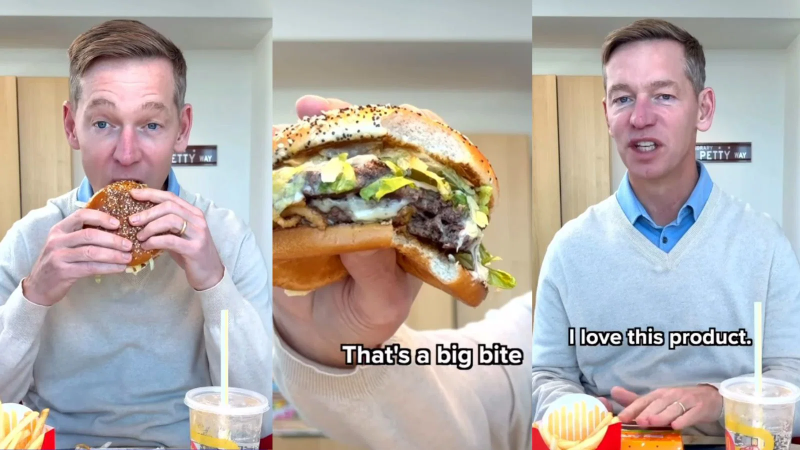
Recently, McDonald’s has started doing CEO taste-testing videos for their new products. Essentially, they record their CEO eating the meal and giving his feedback on it. CEO Chris Kempczinski recently tried McDonald’s new Big Arch Burger. When taking his “big bite,” the CEO took a rather small bite, basically only eating the bread. He also praised how good it was before the video was randomly cut.
Popularity:
The video quickly went viral because people are already skeptical of fast food, and his small bite made the footage appear inauthentic or humorous. Competitors like Burger King and Chick-fil-A amplified their reach by posting contrasting videos of their CEOs visibly enjoying meals.
Common usage:
The video is commonly referenced as an example of why some consumers question McDonald’s food quality. Social media users have created hundreds of parodies, exaggerating the CEO’s tiny bite for comedic effect, turning it into a meme and cultural talking point.
Branding Potential:
Other fast food companies could use similar CEO taste-test videos to showcase authenticity, enjoyment, and product appeal. By showing executives genuinely eating and enjoying their food, brands can build trust, engage audiences, and position themselves as more appealing or relatable than competitors.
NPC Energy/ Not Real People:
Origin:
This meme began in the early 2020s. Jokes about people behaving like predictable, “scripted” characters in real life. NPC, meaning “Non-Playable Character,” comes from video games. These characters follow predictable scripts, repeat the same dialogue, and often react in limited, pre-defined ways. In gaming communities, this term was used to describe characters who lacked agency or unpredictability.
Popularity:
NPC Energy memes are popular because they are relatable and humorous. They allow people to jokingly critique others’ predictable behavior or social media posts without confrontation. The meme also taps into cultural commentary, pointing out herd mentality, performative behavior, and the pressure to conform online.
Common Usage:
Reaction memes, like a video or image of someone doing something predictable with the caption “NPC energy” or “Not real people.” People also label public figures, social media influencers, or even friends jokingly as NPCs to call out robotic or inauthentic behavior.
Branding Potential:
A brand could contrast “NPC-like competitors” with its own real, human approach to products or customer service. Brands could also encourage fans to submit “NPC moments” that the brand then reacts to or features, which could increase engagement and community interaction. With the NPC trend, there are many different routes a company could go down in order to utilize branding potential.
Significance of Trends and Memes on Social Media:
Trends and memes play a major role in shaping how people communicate online. They act as a kind of digital language, allowing users to quickly express ideas, humor, and opinions in a way that is instantly recognizable to others.
Impact on Digital Culture and Online Communities:
Memes help build online communities by creating shared experiences and inside jokes. When users participate in a trend, they feel part of a larger group that understands the reference.
Why Brands Should Participate in Trends/Memes:
Brands that engage with trends and memes can significantly enhance their digital presence. Participating in relevant trends helps brands appear more relatable, current, and human, especially to younger audiences. It also increases visibility, as trending content is more likely to be shared and reach wider audiences.
Add comment
Comments